Omega 3 Supplements During Pregnancy

Omega 3 fatty acids are fatty acids that are used to help control fats in the body. They may also be used by pregnant women. You should strongly consider the use of omega 3 supplements during your pregnancy.

Why is a Supplement So Important?

You need to get an omega 3 supplement to work for you during your pregnancy because your body is not going to actually produce these fatty acids. You have to go out and get these fatty acids for yourself.

What Can a Supplement Do?

The things that a supplement like this can do for your body during a pregnancy can be important. First, you need to use a supplement to help control your heart’s natural rhythm. This is so it will not be at risk of damages or stress.

It can also assist you in keeping your pregnancy under control. It has been found that women who use omega 3 fatty acids during pregnancy are less likely to suffer from issues relating to pre-term labor.

Can It Help the Baby?

You can use omega 3 supplements to improve your unborn child’s health as well. These supplements can be used to support brain growth in an unborn child. A child whose brain grows properly before birth will be more likely to have improved mental skills.

In fact, supplements are made without the use of mercury, a substance that might be found in some natural sources that omega 3s can be found in. Mercury can cause brain damage in an unborn child. Therefore, a supplement with these fatty acids should be used.

Can You Get Them Elsewhere?

You can always get these fatty acids from leafy green vegetables and also from soybeans. Some fatty fish types like trout or salmon may work too. A supplement should still be used so you can ensure that you are getting an appropriate amount.

How Much is Needed?

It should not be difficult for you to find a supplement that will provide you with a suitable amount of fatty acids. A good supplement should include about 200 mg of omega 3s. This should help you out with getting enough fatty acids for your baby’s development without creating any significant risks on the pregnancy.

The use of omega 3 supplements can be important to anyone but it is especially important for pregnant women to consider. You need to make sure you are using these supplements the right way.

Light Therapy

Light therapy employs either natural or artificial light to treat various disorders, ranging from psoriasis and other skin diseases to soft bones and seasonal affective disorder (SAD), a type of depression that occurs during the winter.

Origins

Exposure to bright sunlight and to the ultraviolet rays of sun lamps has been used to treat skin diseases for many years. The application of light therapy for treating SAD dates from the late 1980s when doctors first recognized the link between depression and the long, dark days of mid winter. Practitioners

Light therapy may be administered by a physician, physical therapist, or psychologist. It is also carried out at home under instructions by a qualified health professional.

When It Is Used

Light therapy is now the treatment of choice for SAD, largely replacing the use of antidepressants and psychotherapy. Ultraviolet light has several uses. One is to treat psoriasis, often in conjunction with drugs, as well as other nonspecific skin conditions that cause itching. Another is to treat rickets (in children) or osteomalacia (in adults). These disorders, in which the bones become soft, are caused by a lack of vitamin D, which the body makes when the skin is exposed to sunlight. Elderly shut ins benefit from such treatment in two ways: The light therapy helps strengthen their bones, and at the same time helps them counter depression. Infants born with jaundice are also sometimes exposed to ultraviolet light. Other potential uses of light therapy include treatment for jet lag, sleep disorders, and the biorhythm problems that are often experienced by people who work at night.

How It Works

Exposure to varying levels of light affects the biological clock of all living creatures. In humans, lack of sunshine has a more profound psychological effect than was formerly recognized. (Some researchers estimate that 20 percent of people who live in the northern United States and Canada could benefit from light therapy, with women outnumbering men four to one.) Daylight stimulates the human brain to produce hormones and other brain chemicals that are essential for psychological and emotional well being. For most SAD sufferers, daily exposure to a few hours of very bright fluorescent lights relieves their symptoms as effectively as a winter vacation in the sunny tropics. Within four days of beginning treatment, most patients show a marked improvement-much more quickly than with anti depressant medication. Benefits seem to be the same whether therapy takes place during the day or night. Ultraviolet light also directly affects the skin in several ways: It promotes the manufacture of vitamin D and slows the growth of new skin cells in psoriasis. Its drying effect may help improve acne. In some people, however, sunlight triggers a flare up of acne; one should proceed with caution.

What to expect

The special fluorescent lights used for treating SAD are housed in boxes containing a reflector and a light diffusing cover. The treatments, which are simple, painless, inexpensive, and harmless when done properly, usually take two or three hours a day, although some people benefit from as little as half an hour of exposure. During a treatment, the patient can nap, read, or go about other quiet activities. New types of light therapy devices that would not interfere with a patient’s daily routine are being investigated. One of these is a computer controlled gadget that switches on a bright light early in the morning to simulate the arrival of dawn before the time of the usual winter sunrise. Studies at New York’s Columbia Presbyterian Medical Center, where the device was developed, found that test volunteers woke up feeling alert and vigorous.

Precautions

  • Light therapy is effective only with lights for this purpose. Other types of bright lights, such as lamps and sunlamps, are not suitable.
  • To avoid eye irritation and damage, do not look light source. Always cover the eyes of babies who are exposed to bright, direct light.
  • Because ultraviolet light increases the risk of skin use should be carefully monitored by a doctor.

Massage

Origins

Massage is an instinctive means of communication and giving comfort. Among animals, mothers stroke their young, and the adults of many species rub or groom each other. Medically, massage is our oldest form of treatment and one that is used by every culture. The earliest Chinese, Egyptian, and Indian medical writings all describe preventive and therapeutic uses of massage. Galen, a second century Roman physician, massaged both the emperor and gladiator, and wrote more than a dozen medical books about massage. The most familiar form in the United States, Swedish, or classic massage, was developed in Sweden in the early 1800s by Per Henrik Ling; before his death in 1838, institutes for it had been established in several countries. Following World War I, massage by hand was gradually replaced by the electrical devices used in physical therapy. By the 1940s, massage therapy had been eclipsed by modern medicine, and it was relegated to seedy massage parlors or scorned as a pleasure of the pampered rich. In recent years, the pendulum has begun to swing back, and massage by hand is once again considered a useful therapeutic tool.

Practitioners

Almost everyone can do a simple form of massage on himself or someone else, but special instruction is needed to master the techniques of the therapeutic form. Depending upon the practice, training ranges from a few weeks to a year or more. For membership, the American Massage Therapy Association requires 500 hours of study, including courses in anatomy and physiology. There are also institutes that teach and certify certain specialized forms of massage such as rolfing, a vigorous deep kneading, and reflexology and shiatsu, techniques in which specific pressure points are pressed or massaged to alleviate pain and other symptoms. Most massage therapists practice independently, although some work in tandem with physical therapists, sports medicine physicians, rehabilitation specialists, osteopaths, chiropractors, and other health professionals. To find a reputable practitioner, call the rehabilitation, or physiatry, department of a hospital.

When It Is Used

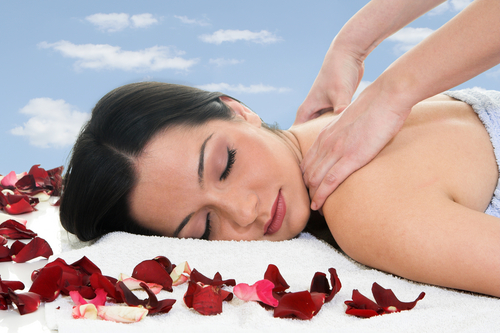
Massage is employed to alleviate stiffness, tension, and soreness in muscles, and to promote comfort and help overcome stress. Many athletic trainers recommend massage to loosen muscles before competition as well as to ease soreness afterwards. Massage can also relieve leg cramps. If you are often awakened by leg cramps or suffer restless leg syndrome, try massaging your legs before going to bed. Back and shoulder massages help some women manage labor pains, and gentle massage is one way to comfort a colicky baby. Migraines and tension headaches can be alleviated by massage; the same is true of lower back pain due to muscle spasms.

How It Works

In general, massage works by easing muscle and psychological tension and promoting relaxation. The use of aromatic oils during massage a variation of aromatherapy can help deepen relaxation. Massage increases blood flow to the area being rubbed, and this may speed healing. Contrary to common claims, however, massage cannot speed the expelling of toxins from the body. Practitioners of massage techniques that employ pressure points for example, shiatsu, reflexology, and acupressure claim benefits similar to those of acupuncture. The idea is to apply pressure to a specific part of the body to elicit a response elsewhere.

What To Expect

For Swedish, or European, massage, the person receiving treatment undresses and then reclines on a padded table, mattress, or floor pad, and the massager stands or kneels at his side. A towel or sheet is draped over parts of the body that are not being massaged. A warm, often scented oil is applied to the exposed skin, which is then massaged with different strokes. Depending upon the stroke, the fingers, thumbs, palms, or edges of the hand, as well as elbows and forearms, are used. Most strokes are gentle and pleasant. In deep massage, however, the muscles are vigorously prodded and thumped. The effect should be invigorating rafter than uncomfortable; let the practitioner know if the massage produces any sharp or radiating pain. Rolfing, another vigorous form of massage, involves manipulating the deep connective tissue, or fascia, that holds the muscles together. During a session, the rolfer uses his hands, fingers, and elbows to press deeply or pummel different parts of the body. A session can be quite painful, but devotees say they feel wonderful afterwards. There are a few other therapies that incorporate massage as part of their overall approach. For example, Hellerwork, an outgrowth of rolfing, combines deep tissue massage with posture exercises. And polarity uses massage to harness and redirect the body’s flow of energy. It also employs yoga, exercise, and nutritional and psychological counseling to provide a total approach to health and healing.

Helpful Hints for Diets

Though precise rules of nutrition were not formulated in ancient days, our ancestors had evolved a set of healthy food habits such as the use of unrefined cereals, the combination of cereals and dais to provide ‘complete’ proteins, and the use of natural sugars. Modern man, however, has acquired artificial tastes and alienated himself from Nature even in his food habits. The growing consumption of refined grains, white sugar and junk food creates disorders in the human body.

  • Soaking, sprouting and fermentation increase the nutritional value of dais and cereal grains. Sprouting breaks down proteins and starches into simple forms and makes the vitamins available for ready absorption. The increase in vitamins Band C compensates for the minor losses in roasting and cooking. Methi seeds are especially benefited by this method. Sprouting makes them lose their bitterness, thus allowing us to avail their valuable amino acids.
  • Another golden rule is combination. Since the Indian diet relies heavily on cereals, combine cereals with dais for maximum protein value. Good sources of vegetable proteins are yeast (khameer), skimmed milk powder, soya granules, mushrooms, sprouted dais, peanuts and paneer.
  • Do not over-wash vegetables, do not soak them in water for a long time, and do not store them for longer than necessary. This helps vegetables retain valuable water-soluble vitamins and minerals.
  • Conserve vitamins by cooking vegetables in very little water, with a lid on the saucepan.
  • Never throwaway the water in which vegetables were cooked. Use it for making dais, curries, soups and gravies.
  • Use non-stick pans to minimize the use of oil.
  • Avoid using aluminum saucepans, unless you are careful not to scour them. Try to use stainless steel or enamel saucepans for soups, etc. Copper and brass vessels are highly recommended.
  • As far as possible, do not liquidize vegetables and fruits at high speeds. Even chutneys are best ground on a grindstone, because high-speed mixers can destroy vitamins B and C.
  • Do not peel fruits and vegetables unnecessarily (except for fruits such as oranges, mangoes and bananas). Peeling removes much of the nutrients that fruits and vegetables are supposed to provide.


Lets Talk About The Fact

Oil operators spend billions of dollars each year on oilfield equipment. Some of the products purchase consists of casing, tubing, pump jack, oil rig, rotary tables, block, truck mounted rigs, jack up rigs. There are hundreds of company that sell equipment. Finding and buying oilfield equipment such as oilfield drill bits and coiled tubing is not necessarily simple. The businesses the use this equipment are working in a very high pressure situation that requires the finest parts and services so that the operations can be as safe as humanly possible.

There are more than 40,000 oil fields that require specialized equipment to run. Some are on land, others are offshore. No matter where the field is located oilfield equipment is required. Oil fields are regions with a large quantity of oil wells. Most of the wells are extracting crude oil.

With the growing need for oil the necessity of moving the equipment from old location to the new oil field is increasing. Once a new oil field has been found the extraction should be started immediately and thus the need for moving various equipment like drilling dampeners, pulsation dampeners and many more is vital to the oil extracting companies. As a result of this there is an increased demand for drilling rig moving equipment. Oil industry companies no longer invest in fixed drilling equipment. It is more cost effective to be able to transport a drilling rig to new oil deposits than to go for new equipment as these equipment are very expensive.

Lemongrass

Lemongrass is cultivated in Central and South America and Australia. The medicinal parts of the lemongrass plant are the dried leaves, the lemongrass oil of Cymbopogon citratus, and the citronella oil of C. nardus. Lemongrass contains alkaloids, a saponin fraction, and cymbopogonol. Fresh leaves contain 0.4% to 0.5% volatile oil that contains citral, myrcene, geranial, and several other fragrant compounds. Myrcene may have some peripheral analgessic activity similar to peripherally acting opiates that directly down-regulate sensitized receptors.

Reported uses

Lemongrass is used topically as an analgesic for neuralgic and rheumatic pain and strains, and as a mild astringent. The
crushed leaves are used topically as a mosquito repellent. The essential oil is used as a food additive and also in perfumes. Internally, lemon grass is used as an antispasmodic and for the treatment of nervous and GI disorders.

Administration

  • Oil: Applied topically for pain
  • Tea: Prepared by adding 2 to 4 g of esh Or dried leaves to 5 oz of boiling Water.

Hazards

Lemongrass may cause dry mouth, polyuria, allergic reactions, hypotension, and increased liver enzymes. Lemongrass has been found to have a diuretic effect in rats. Concomitant use of lemongrass with a diuretic may cause excess diuresis. Concomitant use of lemongrass with an antihypertensive agent may lead to hypotension. Lemongrass may exert an antimicrobial and antifungal effect. Concomitant use of lemongrass with an antibiotic and/or antifungal may lead to an enhanced effect.
Patients who are pregnant or breast-feeding or with a history of liver dysfunction shouldn’t use this herb.

Clinical considerations

  • Tell patient that lemongrass may cause increased frequency of urination.
  • Monitor patient’s liver enzymes.
  • Advise patient to keep lemongrass out of reach of children.
  • Tell patient to remind prescriber and pharmacist of any herbal or dietary supplement that he’s taking when obtaining a new prescription.
  • Advise patient to consult his health care provider before using an herbal preparation because a treatment with proven efficacy may be available.

Research summary

Studies have shown lemongrass to be useful as an antitumor agent and a fever reducer. There has also been some indication that lemon grass has antiradical and antioxidant activity.

Acupressure

A hands-on medicine that is at least a few thousand years old, acupressure evolved as a blend of massage and acupuncture (see following page). It is designed to unleash or lift the restrictions that injury has placed on the body’s flow of energy. It is also used for preventive health.

While it is based on the same principles of energy flow as acupuncture, acupressure uses fingers, knuckles or blunt-edged instruments instead of needles. Pressure is applied to specific locations on the body, called meridian (or acupressure) points, which correspond with the patient’s diagnosis. Both specific, easily located symptoms, such as neck and shoulder pain, or nonspecific symptoms, such as menstrual problems, may be treated with acupressure.

The pressure can be extremely light-just the weight of the finger-or deeper, like a massage. The touch will encourage the free flow of the body’s energy, or chi, in places where it is blocked. Sometimes called shiatsu, this type of massage includes pressure applied to specific areas of the body also targeted in acupuncture.

One advantage of acupressure is that it can be a form of self-care-that is, it can be administered at home, which is important to many people who suffer from chronic pain. Perhaps most important to acupressure practitioners and Americans unfamiliar with alternative remedies is the fact that acupressure is immediately understandable. It makes sense: When we bash a toe or burn a thumb in the kitchen, we instinctively grab the painful parts and hold on, tightly, in order to blunt the hurt. And you don’t have to know anything about meridians or endorphins to know that this works, at least temporarily.

Craniosacral Therapy

As powerful directors of the body’s actions, the head and spine contain our most important communications pathways. That is the founding belief of craniosacral therapy, a modern kind of bodywqrk that was derived from what used to be called cranial osteopathy.

Craniosacral therapy consists of gentle, non­invasive, hands-on massage that corrects imbalances in the fluid system that connects the brain and spinal cord. Unlike Swedish massage, which focuses on the muscles, or Rolf therapy, which focuses on the alignment, craniosacral therapy focuses on a membrane, or sac, that contains cerebrospinal and other important fluids of the nervous system.

The therapy, developed in the early 1970s by osteopath John Upledger, D.O., is based on belief in the disputed existence of the craniosacral system, which, like the respiratory system, cardiovascular system or nervous system, is believed to influence the development and performance of the body. Therapists say imbalance or restriction in the craniosacral system, sometimes dating back as far as birth, can potentially cause any number of sensory, motor or neurological disabilities.

The therapist uses a very gentle touch to detect restrictions and then subtle movements, often on the plates of the skull, to assist the hydraulic forces of the craniosacral system and encourage the body’s natural healing powers.

Applied by itself or in concert with other kinds of bodywork, craniosacral therapy can be used to help relieve whiplash, head and neck injuries, temporomandibular joint syndrome (TMJ), balance problems, effects of trauma and a host of other disorders. Today, a variety of health professionals perform craniosacral work, including osteopaths, chiropractors, acupuncturists and physical therapists.