Bach Flower Remedies

Of the several variations on herbal ism, one of the best known is the system of Dr. Edward Bach, an English bacteriologist and homeopath who created and used flower essences as an alternative to conventional drug remedies. His preparations were made by immersing flowers in water and then exposing this combination to heat or to sunlight He believed that these essences, individually and in combination, would restore the mental and emotional balance essential for physical well being.

The best known of the Bach concoctions is the Rescue Remedy, a combination of five different formulas, which is reserved for especially trying situations such as the death of a loved one. Other Bach remedies include agrimony to relieve anxiety, impatiens to reduce emotional irritability; and a combi­nation of larch, holly, and mustard flower essences for asthma.

Since Bach’s death in 1936, several practitioners in the United States have developed comparable remedies The best known among these is a group called the 72 Flower Essence Society (FES), whose products are based on flowers native to California.

Flower essences are sold in small bottles with eye droppers fmm which a drop or two is usually placed under the tongue at specified times. The drops can be found in many health food stores, and are also available from mail order catalogs.

The Importance of Preserving Cord Blood

When a child is born, some blood remains in the placenta and umbilical cord. This blood is known as umbilical cord blood. This blood is very important to medical science as it contains hematopoietic stem cells which can form white blood cells, red blood cells and platelets. If extracted and stored in cord blood banks, it can be used later to treat cancer and other diseases related to the blood and immune system.

How is cord blood collected?

Umbilical cord blood is collected as soon as the newborn baby’s umbilical cord has been severed in a cord blood unit. It is extracted from the neonatal end of the cord within 10 minutes of the baby’s birth. Remaining cord blood and stem cells are collected from the placental end, and then the placenta is further process in a stem cell laboratory for additional stem cells. The minimum amount of cord blood required by the cord blood bank is 75 ml.

After extraction, the extracted cord blood is subjected to viral testing that includes tests for HIV, Hepatitis B, and Hepatitis C. Tests are also done to examine nucleated blood group antigen (ABO and Rh), cell count, cell viability, molecule cluster, bacterial growth and fungal growth.

How is cord blood stored?

After collection, the cord blood is taken to the lab, processed and preserved by cooling below the freezing point of water. This process of cooling is called cryopreservation. There are different methods of cyropreserving blood. Some methods require the red blood cells to be separated and removed while others require them to be kept intact. After the cord blood unit has been slowly cooled to -90o Celsius, it is placed in liquid nitrogen tank to keep it frozen at -196o Celsius. The slow freezing process keeps the cells alive. There are still differing views as to the optimal procedure for cryopreservation.

Where is cord blood stored?

Cord blood is stored in cord blood banks which have special facilities for storing cord blood. Parents can choose to store their child’s cord blood either in a public bank or a private bank. Storing in a public bank is considered a donation for use by anyone who is in need. Once donated, the blood is stripped of all identifying information so that the donors cannot retrieve their own blood. Storing the blood in a private bank makes it available to the donors anytime they are in need because the identifying information is kept intact. Private banks normally charge $1,000 – $2,000 to preserve the blood.

What are the benefits of preserving cord blood?

Cryopreserving cord blood makes this stem cell rich blood can cure terminal diseases and save life later. The preserved blood can be used for the treatment of cancer, blood disorders and genetic diseases related to the immune system. One special area of use is treatment of leukemia when a suitable donor for bone marrow transplantation is not available.

Diphtheria

This acute, highly contagious infection is characterized by a grayish membrane that coats the throat. In the disease’s early stages, other symptoms usually include a sore throat, low fever, and swollen glands in the neck During later stages, the patient may experience difficulty in swallowing or breathing; he may also have a profuse discharge from the nose plus a rapid heartbeat. Although many people think of diphtheria as a children’s disease, it can actually strike at any age. The organism that causes diphtheria is Corynebacterium diphtheriae, which spreads by way of droplets expelled during coughing, sneezing, or simply breathing. Some strains of the bacterium produce a poisonous exotoxin that travels through the bloodstream and attacks the nerves, heart, kidneys, and reproductive organs. The results can be nerve and heart inflammation, heart failure, shock, and even death.

Diagnostic Studies And Procedures

Because diphtheria is rare in the United States and other industrialized countries, most doctors in these areas have never encountered it and so may not recognize it. Once the classic gray membrane appears, however, a physician will probably suspect diphtheria. A culture for the bacterium, obtained from a sample of throat secretions, can confirm a diagnosis.

Medical Treatments

This disease is so contagious that any one who has it must be isolated, usually in a hospital intensive care unit. The diphtheria antitoxin should be given immediately. This will neutralize the exotoxin, but only that which has not yet attacked body cells; it’s less effective, there fore, if given later in the course of the disease. An antibiotic usually penicillin or erythromycin is also needed to kill the bacteria. Depending on the severity of the disease and the presence of complications, supplemental oxygen may be given, and the lungs, heart, and nervous system might be monitored for further signs of complications. If the throat has swollen, artificial respiration may be needed to prevent the patient from suffocating. Recuperation can be lengthy, particularly if there are heart complications. Bed rest is essential, sometimes for two or three months in severe cases. Anyone exposed to diphtheria should find out when they were last immunized against the disease, and receive, if necessary, a booster shot or a complete course of immunizations.

Alternative Therapies

Diphtheria is a medical emergency requiring prompt treatment with the diphtheria antitoxin. Any alternative therapies must be used strictly as an adjunct to this medical care.

Aromatherapy

During convalescence, soothing scents may help relax an irritable or restless patient; place a bowl of steaming water containing aromatic oils at the person’s bedside. Bach flower remedies may also be used to foster emotional well being.

Massage

Swedish or other therapeutic massages can help to relax the convalescent. Massage may also tone muscles in preparation for a gradual return to normal physical activity.

Self Treatment

Diphtheria requires medical treatment, but you can take measures to prevent the disease. Keep your immunizations up to date, an adult should have a diphtheria booster shot at least every 10 years. If it has been longer since your last one, you need a complete three dose series of immunizations. This is especially important if you plan to travel to any country that has had recent outbreaks of the disease. Make sure that children receive the diphtheria vaccine at 2,4, 6, and 18 months of age. They also need a booster shot when they begin school (usually between the ages of 4 and 6 years) and every 5 to 10 years after that. For young children, the diphtheria vaccine is usually combined with pertussis and tetanus immunizations in what is called the DPT shot. Although some youngsters do suffer adverse reactions to this injection, they are generally responding to the pertussis component and not the diphtheria vaccine. A child who has previously had an adverse reaction to the DPT shot or who has ever had a seizure or convulsion, should not receive the pertussis vaccine but should be given the diphtheria and tetanus vaccines, which can still be combined in a single shot.

Other Causes of Throat Symptoms

The early symptoms of diphtheria are similar to those of flu, a cold, strep throat, or other upper respiratory infections. Mononucleosis or scarlet fever may cause a very sore throat with no other cold symptoms.

Light Therapy

Light therapy employs either natural or artificial light to treat various disorders, ranging from psoriasis and other skin diseases to soft bones and seasonal affective disorder (SAD), a type of depression that occurs during the winter.

Origins

Exposure to bright sunlight and to the ultraviolet rays of sun lamps has been used to treat skin diseases for many years. The application of light therapy for treating SAD dates from the late 1980s when doctors first recognized the link between depression and the long, dark days of mid winter. Practitioners

Light therapy may be administered by a physician, physical therapist, or psychologist. It is also carried out at home under instructions by a qualified health professional.

When It Is Used

Light therapy is now the treatment of choice for SAD, largely replacing the use of antidepressants and psychotherapy. Ultraviolet light has several uses. One is to treat psoriasis, often in conjunction with drugs, as well as other nonspecific skin conditions that cause itching. Another is to treat rickets (in children) or osteomalacia (in adults). These disorders, in which the bones become soft, are caused by a lack of vitamin D, which the body makes when the skin is exposed to sunlight. Elderly shut ins benefit from such treatment in two ways: The light therapy helps strengthen their bones, and at the same time helps them counter depression. Infants born with jaundice are also sometimes exposed to ultraviolet light. Other potential uses of light therapy include treatment for jet lag, sleep disorders, and the biorhythm problems that are often experienced by people who work at night.

How It Works

Exposure to varying levels of light affects the biological clock of all living creatures. In humans, lack of sunshine has a more profound psychological effect than was formerly recognized. (Some researchers estimate that 20 percent of people who live in the northern United States and Canada could benefit from light therapy, with women outnumbering men four to one.) Daylight stimulates the human brain to produce hormones and other brain chemicals that are essential for psychological and emotional well being. For most SAD sufferers, daily exposure to a few hours of very bright fluorescent lights relieves their symptoms as effectively as a winter vacation in the sunny tropics. Within four days of beginning treatment, most patients show a marked improvement-much more quickly than with anti depressant medication. Benefits seem to be the same whether therapy takes place during the day or night. Ultraviolet light also directly affects the skin in several ways: It promotes the manufacture of vitamin D and slows the growth of new skin cells in psoriasis. Its drying effect may help improve acne. In some people, however, sunlight triggers a flare up of acne; one should proceed with caution.

What to expect

The special fluorescent lights used for treating SAD are housed in boxes containing a reflector and a light diffusing cover. The treatments, which are simple, painless, inexpensive, and harmless when done properly, usually take two or three hours a day, although some people benefit from as little as half an hour of exposure. During a treatment, the patient can nap, read, or go about other quiet activities. New types of light therapy devices that would not interfere with a patient’s daily routine are being investigated. One of these is a computer controlled gadget that switches on a bright light early in the morning to simulate the arrival of dawn before the time of the usual winter sunrise. Studies at New York’s Columbia Presbyterian Medical Center, where the device was developed, found that test volunteers woke up feeling alert and vigorous.

Precautions

  • Light therapy is effective only with lights for this purpose. Other types of bright lights, such as lamps and sunlamps, are not suitable.
  • To avoid eye irritation and damage, do not look light source. Always cover the eyes of babies who are exposed to bright, direct light.
  • Because ultraviolet light increases the risk of skin use should be carefully monitored by a doctor.

Massage

Origins

Massage is an instinctive means of communication and giving comfort. Among animals, mothers stroke their young, and the adults of many species rub or groom each other. Medically, massage is our oldest form of treatment and one that is used by every culture. The earliest Chinese, Egyptian, and Indian medical writings all describe preventive and therapeutic uses of massage. Galen, a second century Roman physician, massaged both the emperor and gladiator, and wrote more than a dozen medical books about massage. The most familiar form in the United States, Swedish, or classic massage, was developed in Sweden in the early 1800s by Per Henrik Ling; before his death in 1838, institutes for it had been established in several countries. Following World War I, massage by hand was gradually replaced by the electrical devices used in physical therapy. By the 1940s, massage therapy had been eclipsed by modern medicine, and it was relegated to seedy massage parlors or scorned as a pleasure of the pampered rich. In recent years, the pendulum has begun to swing back, and massage by hand is once again considered a useful therapeutic tool.

Practitioners

Almost everyone can do a simple form of massage on himself or someone else, but special instruction is needed to master the techniques of the therapeutic form. Depending upon the practice, training ranges from a few weeks to a year or more. For membership, the American Massage Therapy Association requires 500 hours of study, including courses in anatomy and physiology. There are also institutes that teach and certify certain specialized forms of massage such as rolfing, a vigorous deep kneading, and reflexology and shiatsu, techniques in which specific pressure points are pressed or massaged to alleviate pain and other symptoms. Most massage therapists practice independently, although some work in tandem with physical therapists, sports medicine physicians, rehabilitation specialists, osteopaths, chiropractors, and other health professionals. To find a reputable practitioner, call the rehabilitation, or physiatry, department of a hospital.

When It Is Used

Massage is employed to alleviate stiffness, tension, and soreness in muscles, and to promote comfort and help overcome stress. Many athletic trainers recommend massage to loosen muscles before competition as well as to ease soreness afterwards. Massage can also relieve leg cramps. If you are often awakened by leg cramps or suffer restless leg syndrome, try massaging your legs before going to bed. Back and shoulder massages help some women manage labor pains, and gentle massage is one way to comfort a colicky baby. Migraines and tension headaches can be alleviated by massage; the same is true of lower back pain due to muscle spasms.

How It Works

In general, massage works by easing muscle and psychological tension and promoting relaxation. The use of aromatic oils during massage a variation of aromatherapy can help deepen relaxation. Massage increases blood flow to the area being rubbed, and this may speed healing. Contrary to common claims, however, massage cannot speed the expelling of toxins from the body. Practitioners of massage techniques that employ pressure points for example, shiatsu, reflexology, and acupressure claim benefits similar to those of acupuncture. The idea is to apply pressure to a specific part of the body to elicit a response elsewhere.

What To Expect

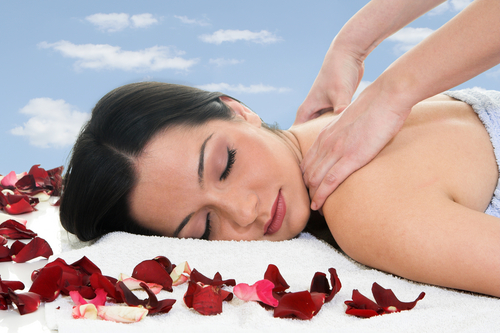
For Swedish, or European, massage, the person receiving treatment undresses and then reclines on a padded table, mattress, or floor pad, and the massager stands or kneels at his side. A towel or sheet is draped over parts of the body that are not being massaged. A warm, often scented oil is applied to the exposed skin, which is then massaged with different strokes. Depending upon the stroke, the fingers, thumbs, palms, or edges of the hand, as well as elbows and forearms, are used. Most strokes are gentle and pleasant. In deep massage, however, the muscles are vigorously prodded and thumped. The effect should be invigorating rafter than uncomfortable; let the practitioner know if the massage produces any sharp or radiating pain. Rolfing, another vigorous form of massage, involves manipulating the deep connective tissue, or fascia, that holds the muscles together. During a session, the rolfer uses his hands, fingers, and elbows to press deeply or pummel different parts of the body. A session can be quite painful, but devotees say they feel wonderful afterwards. There are a few other therapies that incorporate massage as part of their overall approach. For example, Hellerwork, an outgrowth of rolfing, combines deep tissue massage with posture exercises. And polarity uses massage to harness and redirect the body’s flow of energy. It also employs yoga, exercise, and nutritional and psychological counseling to provide a total approach to health and healing.

Lets Talk About The Fact

Oil operators spend billions of dollars each year on oilfield equipment. Some of the products purchase consists of casing, tubing, pump jack, oil rig, rotary tables, block, truck mounted rigs, jack up rigs. There are hundreds of company that sell equipment. Finding and buying oilfield equipment such as oilfield drill bits and coiled tubing is not necessarily simple. The businesses the use this equipment are working in a very high pressure situation that requires the finest parts and services so that the operations can be as safe as humanly possible.

There are more than 40,000 oil fields that require specialized equipment to run. Some are on land, others are offshore. No matter where the field is located oilfield equipment is required. Oil fields are regions with a large quantity of oil wells. Most of the wells are extracting crude oil.

With the growing need for oil the necessity of moving the equipment from old location to the new oil field is increasing. Once a new oil field has been found the extraction should be started immediately and thus the need for moving various equipment like drilling dampeners, pulsation dampeners and many more is vital to the oil extracting companies. As a result of this there is an increased demand for drilling rig moving equipment. Oil industry companies no longer invest in fixed drilling equipment. It is more cost effective to be able to transport a drilling rig to new oil deposits than to go for new equipment as these equipment are very expensive.

Acupressure

A hands-on medicine that is at least a few thousand years old, acupressure evolved as a blend of massage and acupuncture (see following page). It is designed to unleash or lift the restrictions that injury has placed on the body’s flow of energy. It is also used for preventive health.

While it is based on the same principles of energy flow as acupuncture, acupressure uses fingers, knuckles or blunt-edged instruments instead of needles. Pressure is applied to specific locations on the body, called meridian (or acupressure) points, which correspond with the patient’s diagnosis. Both specific, easily located symptoms, such as neck and shoulder pain, or nonspecific symptoms, such as menstrual problems, may be treated with acupressure.

The pressure can be extremely light-just the weight of the finger-or deeper, like a massage. The touch will encourage the free flow of the body’s energy, or chi, in places where it is blocked. Sometimes called shiatsu, this type of massage includes pressure applied to specific areas of the body also targeted in acupuncture.

One advantage of acupressure is that it can be a form of self-care-that is, it can be administered at home, which is important to many people who suffer from chronic pain. Perhaps most important to acupressure practitioners and Americans unfamiliar with alternative remedies is the fact that acupressure is immediately understandable. It makes sense: When we bash a toe or burn a thumb in the kitchen, we instinctively grab the painful parts and hold on, tightly, in order to blunt the hurt. And you don’t have to know anything about meridians or endorphins to know that this works, at least temporarily.

Circulation Problems

Treating Cold Hands and Feet Gingerly

For a winter warmer, try drinking ginger tea before gomg outside in those coldest winter months, or take a 500-mg ginger capsule in the morning. Benefits to circulation accrue over time, not right away, so ginger is a good habit to get into.

In addition to taking supplements, try using it as a seasoning in vegetables and soups-or stir a slice into your tea.

Treat with Good Hands- Your Own

Borrowing a tip from Ayurvedic healers of India, you can give your circulation (and possibly your immune system) a boost with self­massage, using sesame oil. This self-massage is said to promote energy flow by stimulating certain points on the body that are similar to acupuncture points. Using sesame oil adds an antioxidant boost.

Here’s how to perform the self-massage:

Fill a squeeze bottle with sesame oil and plunge it into a sinkful of hot tap water to warm it.

Strip down, place a towel over a chair and sit down.

Massage the oil into your skin, from the head down. Use the balls, not heels, of the hands as your applicators (that is the place where the fingers meet your palms). Make smooth, long strokes down the arms and legs, circular rubs over your head, joints, abdomen and chest. Avoid the genitals, and use long strokes over as much of the back as you can reach. Spend extra time on toes and

A Hot, Hot Soak

Chase away the winter chills with a well-seasoned bath. Stir a teaspoon or two of cayenne pepper or spicy ginger powder into your bath­water and soak.

One warning: The oils in cayenne and ginger will generate heat in the water which could make the bath too hot to handle if mixed with very warm water.